In manufacturing, one of the biggest challenges isn't always designing something new. Sometimes, it's replacing something that has existed for years.
A machine component may be obsolete. A supplier may have stopped producing a particular part. Original drawings may have been lost, or the CAD file may never have existed in the first place.
For businesses relying on older machinery, specialist equipment or legacy products, this can create a significant problem.
Fortunately, the physical part itself can often provide everything needed to recreate it.
Through reverse engineering, 3D scanning, CAD modelling and 3D printing, existing components can be digitally captured, redesigned where necessary and reproduced without needing the original CAD file.
What happens when the original CAD file doesn't exist?
Modern product development typically starts with a digital model. Engineers can modify dimensions, test designs and send CAD files directly to manufacturing equipment.
Legacy parts don't always have that luxury.
A component could have been manufactured decades ago using traditional drawings, manual machining or tooling that no longer exists. Documentation may be incomplete, stored in an outdated format or simply unavailable.
Even when technical drawings exist, they may not contain all the information required to manufacture an accurate replacement.
This is where reverse engineering can help.
Rather than starting with a blank screen, engineers can work backwards from the physical component to create a new digital representation.
What is reverse engineering?
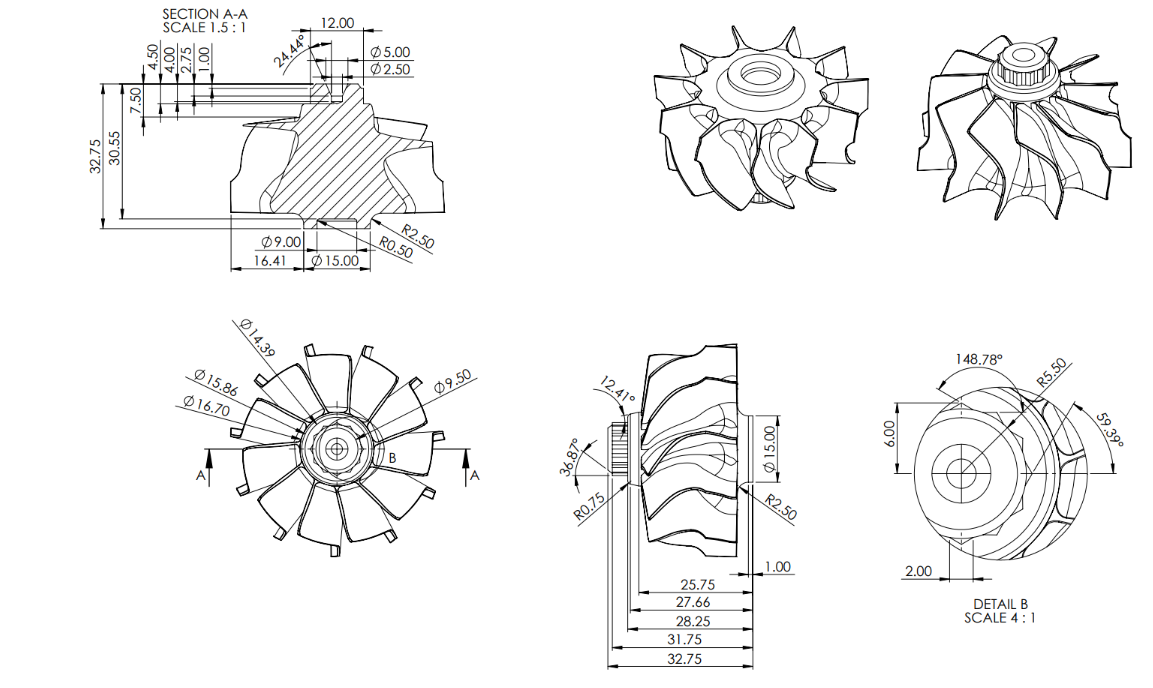
Reverse engineering is the process of analysing an existing physical component to understand its geometry, dimensions, features and functionality, then using that information to recreate it digitally.
Depending on the part, this can involve:
- Measuring critical dimensions
- 3D scanning the component
- Capturing complex geometry
- Creating a CAD model from scan data
- Identifying key interfaces and mounting points
- Recreating internal or external features
- Comparing the digital model against the original component
- Making design improvements where required
The result is a digital CAD file that can be used for future manufacturing.
This doesn't necessarily mean creating an exact copy.
In many cases, reverse engineering provides an opportunity to understand the original design and make sensible improvements before producing the replacement.
From physical component to CAD model
One of the most useful aspects of reverse engineering is turning a physical part into usable digital data.
A component can be scanned to capture its geometry. This data can then be processed and used as the foundation for creating a CAD model.
For relatively simple components, traditional measurement techniques may be sufficient.
For more complex parts, 3D scanning can capture intricate curves, organic surfaces and difficult-to-measure features much more efficiently.
The appropriate approach depends on the component, its size, complexity and the accuracy required.
The important thing is that the physical part becomes the starting point for a new digital design.
Why 3D printing is particularly useful for legacy parts
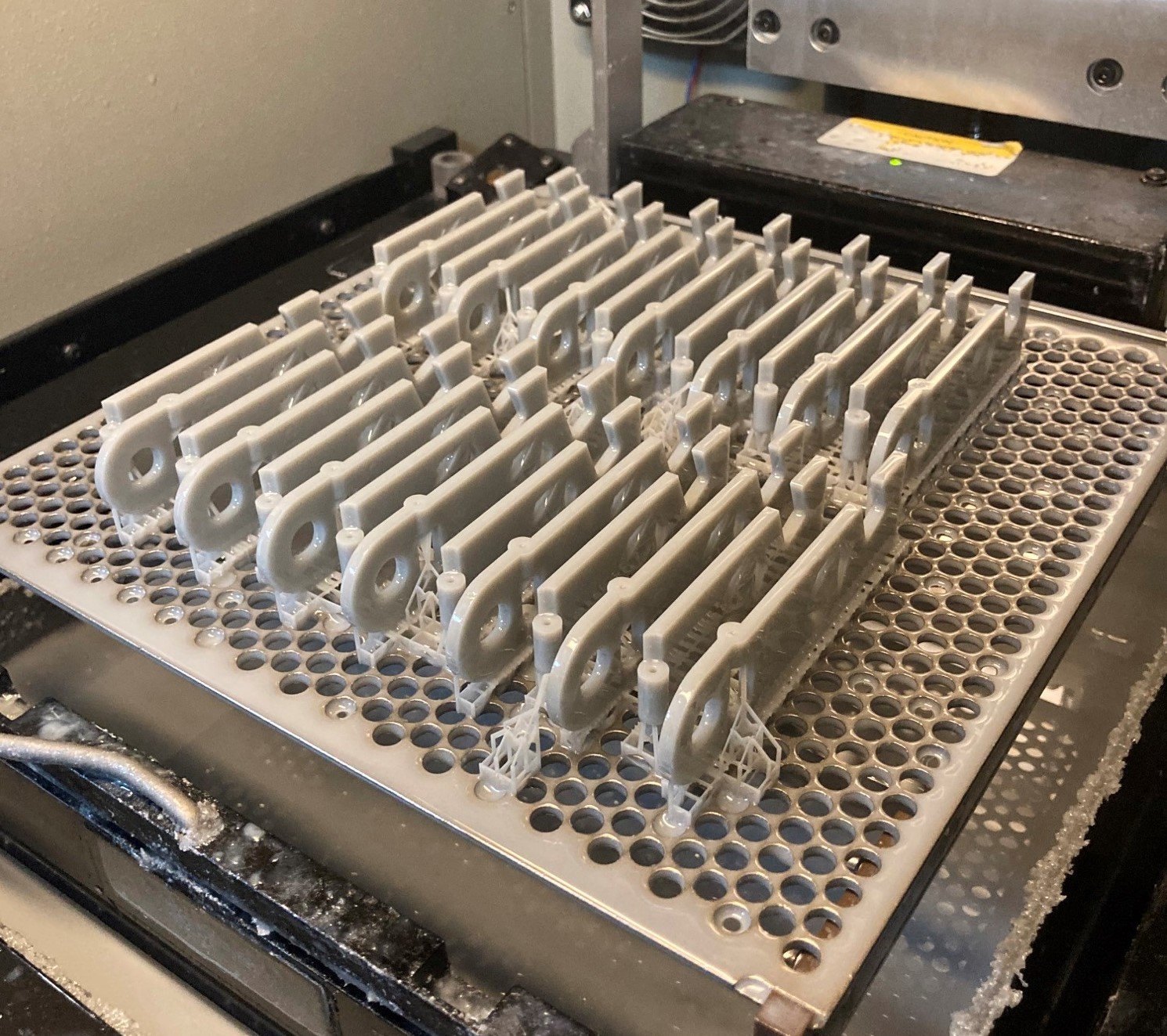
Once a CAD model has been created, additive manufacturing can provide a practical way of producing the replacement.
Unlike traditional manufacturing methods, 3D printing doesn't necessarily require dedicated tooling, moulds or expensive setup.
That makes it particularly useful when only a small to medium number of replacement parts are required.
For example, a business may need:
- A single replacement component
- A small batch of obsolete parts
- A discontinued enclosure
- A replacement bracket
- A bespoke cover or housing
- A specialist machine component
- A prototype replacement before committing to another manufacturing process
Instead of recreating expensive tooling for a component that may only be required in small quantities, the CAD model can be sent directly into an additive manufacturing workflow.
The benefits of recreating legacy components
1. Reduce reliance on obsolete suppliers
If an original manufacturer has discontinued a component, businesses can become dependent on old stock or specialist suppliers.
Reverse engineering provides another option.
By recreating the component digitally, businesses can potentially manufacture replacement parts locally and on demand.
2. Reduce downtime
Waiting for an obsolete component to be sourced can leave machinery or equipment out of operation.
Having a digital model means replacement parts can be manufactured much more quickly when they are needed.
For critical equipment, creating a digital library of important legacy components can also help businesses prepare for future requirements.
3. Manufacture only what you need
Traditional manufacturing processes can become uneconomical for very small quantities.
3D printing is particularly effective for low-volume production because parts can be manufactured without creating dedicated tooling.
This makes it possible to produce one-off or small-batch replacement components economically.
4. Preserve valuable designs
Legacy components often represent years of engineering knowledge.
Once a part has been reverse engineered and converted into CAD, that information can be stored digitally rather than relying solely on the physical component.
This creates a digital record that can be used for future manufacturing, modifications or further development.
5. Improve the original design
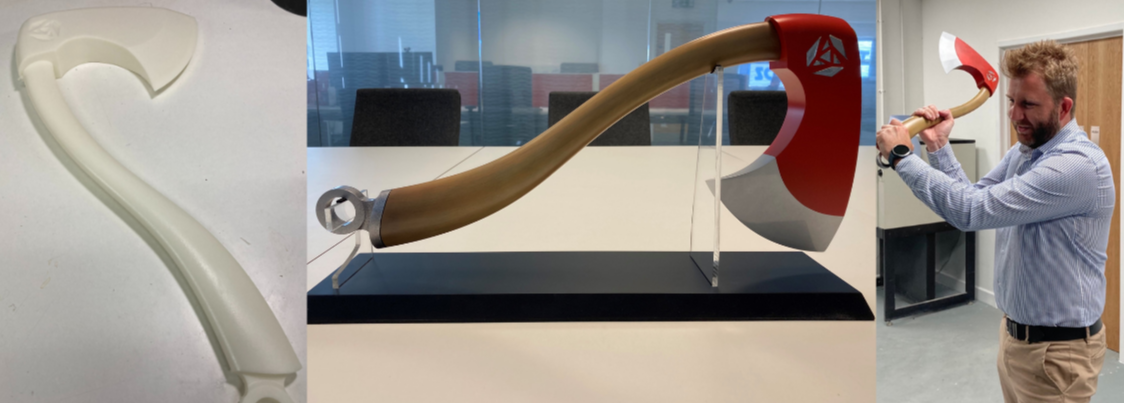
Reverse engineering doesn't always mean reproducing a part exactly as it was.
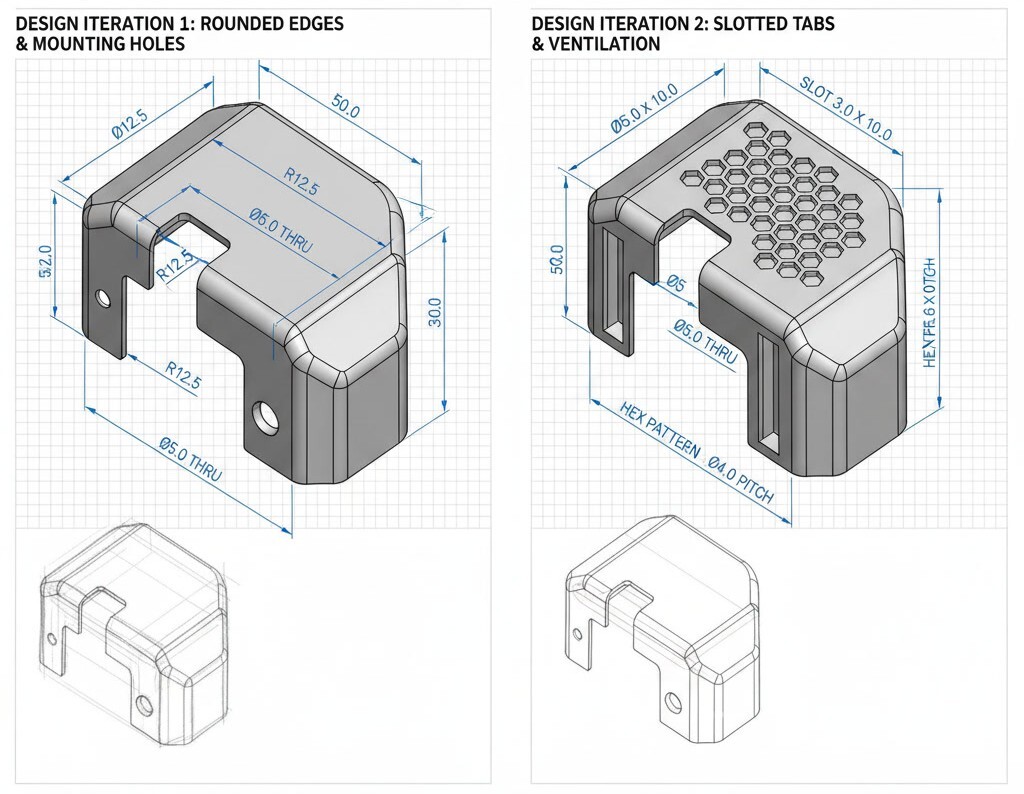
Once the component has been converted into CAD, engineers can identify opportunities to improve it.
Depending on the application, this could include:
- Increasing wall thickness
- Improving mounting features
- Removing unnecessary material
- Improving manufacturability
- Changing materials
- Adding features
- Optimising the design for additive manufacturing
The result can be a replacement that performs the same function while being better suited to modern manufacturing methods.
Choosing the right 3D printing technology
Not every legacy component should be manufactured using the same process.
The best technology depends on factors such as the part's function, size, required accuracy, environment and expected production volume.
For example, SLA 3D printing can be useful for highly detailed components, visual models and applications where a smooth surface finish is important.
SLS and MJF can be suitable for functional nylon components, particularly where durability and complex geometries are required.
FDM can provide a practical option for larger components, functional prototypes and certain production applications.
For more demanding environments, specialist engineering materials can provide additional mechanical, thermal or flame-retardant properties.
The important point is that reverse engineering and additive manufacturing should be considered together. The material and production technology should be selected based on what the recreated component needs to do.
What about parts that are no longer exactly fit for purpose?
This is where engineering expertise becomes particularly important.
A legacy component may have worn over time, making it difficult to determine its original dimensions. Alternatively, the original design may have had known weaknesses.
Simply copying the physical part could reproduce those problems.
A reverse engineering process can therefore involve more than scanning and copying. Engineers can use the original component as a reference while considering how it interacts with surrounding parts and what requirements the replacement needs to meet.
This creates an opportunity to combine reverse engineering with product design and engineering development.
The result is not just a digital copy, but a manufacturable component designed around the requirements of the application.
From one replacement part to a digital spare parts library
One of the biggest long-term benefits of reverse engineering is the creation of a digital inventory.
Instead of storing physical replacement parts indefinitely, businesses can build a library of CAD files for critical components.
This can be particularly valuable for:
- Legacy machinery
- Industrial equipment
- Specialist vehicles
- Defence equipment
- Marine and subsea systems
- Rail applications
- Aerospace equipment
- Bespoke manufacturing machinery
When a component eventually needs replacing, the digital file can already be available.
The part can then be manufactured when required, rather than relying on stock that may no longer exist.
This approach can also help reduce physical inventory and improve supply-chain resilience.
Bringing legacy parts into modern manufacturing
The combination of reverse engineering and 3D printing offers manufacturers a way to bridge the gap between old and new.
A physical component that has no CAD file doesn't necessarily need to become an impossible-to-replace part.
Instead, it can become the starting point for a new digital manufacturing process:
Existing part → Reverse engineering → CAD model → Design validation → 3D printing → Replacement component
This approach can help businesses extend the useful life of equipment, reduce dependence on obsolete supply chains and preserve valuable engineering knowledge.
And importantly, the process doesn't have to stop at simply reproducing an old part.
Once the component exists as a CAD model, it becomes part of a digital engineering environment where it can be modified, improved, reproduced and adapted for future requirements.
Need to recreate a legacy component?
At AME-3D, we can support projects from reverse engineering and CAD design through to prototyping and low-volume manufacturing.
Whether you have an obsolete component, a physical prototype with no CAD data or a legacy part that needs to be reproduced, our engineering and additive manufacturing capabilities can help turn the physical component back into a usable digital and manufactured solution.
Have a part but no CAD file? Get in touch with AME-3D to discuss your requirements.