
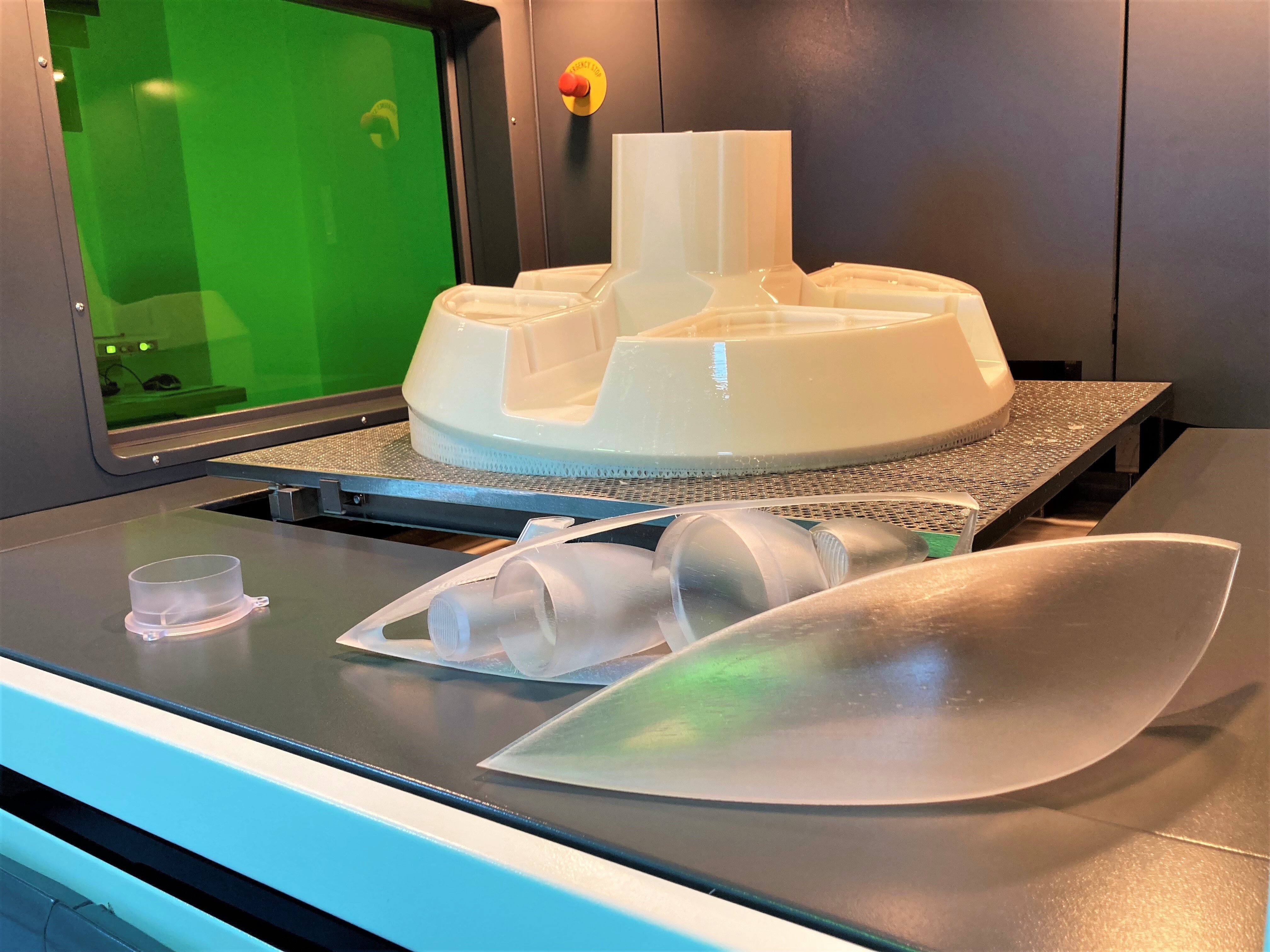
SLA (Stereolithography) 3D printing applications extend far beyond simply producing an early version of a product.
With its ability to produce highly detailed parts with smooth surface finishes and excellent dimensional accuracy, SLA is a versatile manufacturing process for designers, engineers, product developers and manufacturers.
At AME-3D, we use SLA 3D printing for everything from early-stage product development and visual models through to master patterns, detailed components and specialist low-volume parts.
Here are 10 real-world applications for SLA 3D printing.
1. Product Prototypes
One of the most common applications for SLA is product prototyping.
SLA can produce detailed physical versions of a design directly from a 3D CAD model, allowing designers and engineers to assess the size, shape, appearance and functionality of a product before moving into production.
Creating a physical prototype can highlight issues that aren't always obvious on a computer screen, making it easier to identify design changes early and reduce the risk of costly modifications later in the development process.
SLA is particularly useful where the prototype needs a smooth, professional surface finish or intricate details.
2. High-Detail Models
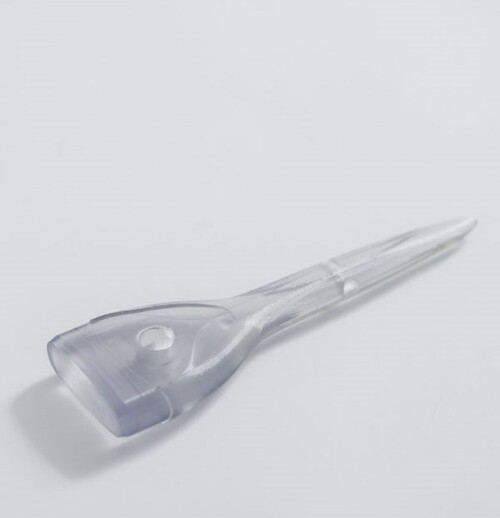
SLA is well suited to producing models with small features, intricate geometry and fine details.
This makes it useful for applications where visual accuracy is important, including:
- Product and design models
- Architectural models
- Scale models
- Demonstration models
- Concept models
- Engineering models
The combination of fine detail and a smooth surface finish can make SLA a good choice when the appearance of the finished model matters.
3. Automotive Prototypes and Components
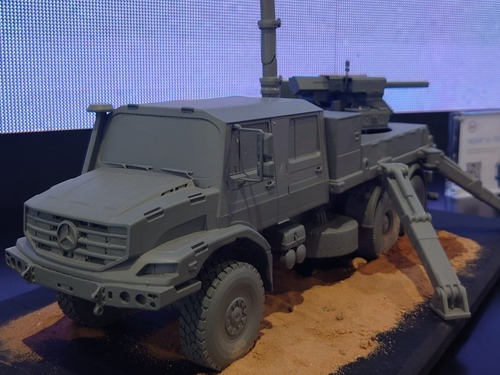
The automotive industry uses additive manufacturing extensively during vehicle development, and SLA can be particularly useful for producing detailed prototype components.
Engineers can use SLA parts to assess everything from component geometry and fit through to the appearance of interior and exterior parts.
It can also be used to produce models and components for design reviews, testing and development before committing to more expensive tooling or production methods.
For automotive companies working to tight development schedules, the ability to move quickly from CAD to a physical part can be a significant advantage.
4. Enclosures and Housings
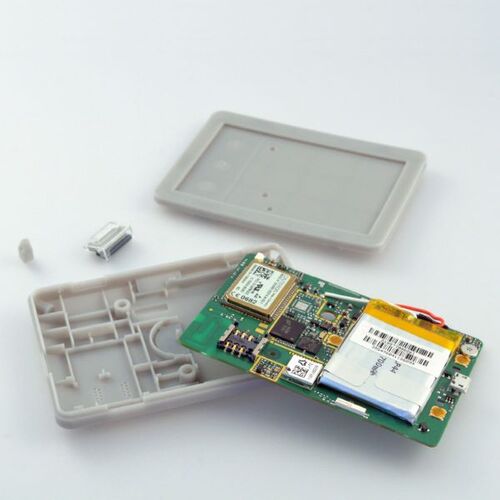
SLA is a useful option for producing prototype enclosures, covers and housings for electronic and mechanical products.
A printed enclosure can be used to check:
- Component fit
- Overall dimensions
- Access and assembly
- Connector positions
- Internal clearances
- Appearance and ergonomics
This allows designers to test the physical design of an enclosure before investing in tooling or committing to a production process.
For presentation prototypes, SLA can also provide a high-quality surface that can be further finished and painted.
5. Master Patterns for Casting
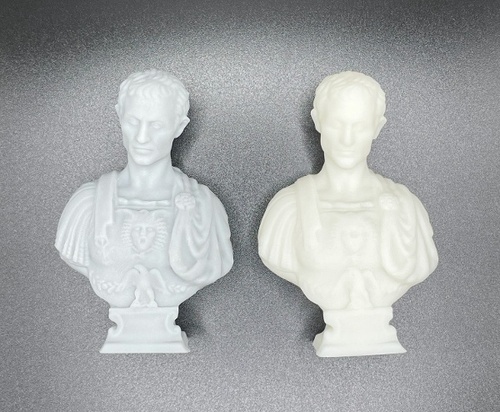
SLA isn't limited to producing the final part itself. It can also be used to create master patterns for other manufacturing processes.
For example, an SLA master can be used to produce silicone mould tooling for vacuum casting.
This creates a useful link between additive manufacturing and low-volume production. A detailed SLA pattern can be produced relatively quickly before being used to manufacture multiple polyurethane castings.
For products requiring only a small number of components, this can provide an economical alternative to traditional tooling.
6. Transparent and Clear Prototypes
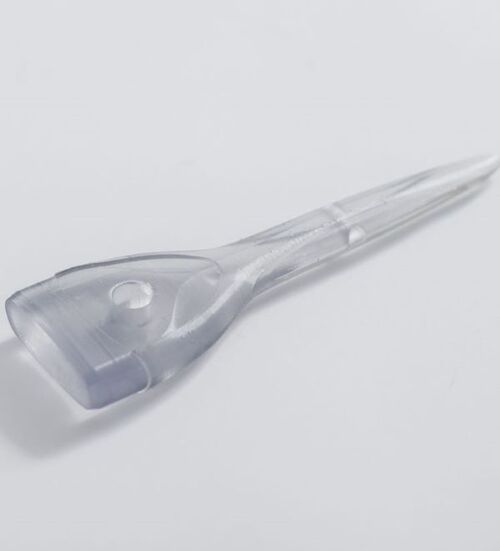
Specialist clear SLA materials can be used when visibility through a prototype is important.
Clear parts can be useful for applications such as:
- Transparent housings
- Fluid and airflow demonstration models
- Optical prototypes
- Lighting components
- Display models
- Product development
The appearance of a clear SLA part can be further improved through post-processing and polishing where required.
This makes clear SLA particularly useful when a prototype needs to demonstrate not just its geometry, but also how a product will look or function visually.
7. Jigs, Fixtures and Manufacturing Aids
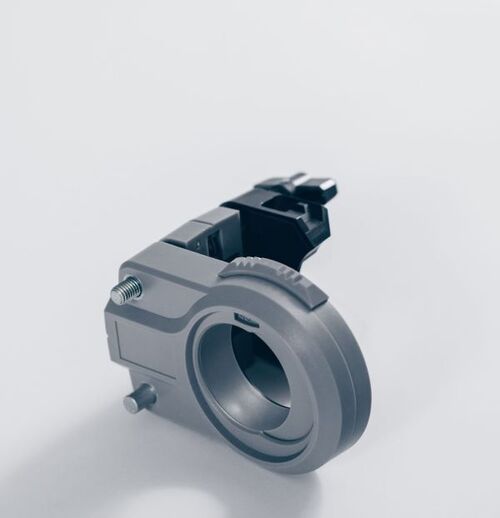
Although Stereolithography is often associated with visual prototypes, it can also be used for certain manufacturing aids.
Custom jigs, fixtures and positioning tools can be produced to support assembly, inspection or production processes.
For applications where high levels of detail or a smooth surface are important, SLA can offer advantages over other additive manufacturing technologies.
However, the material properties and expected loads should always be considered when selecting the most appropriate 3D printing process for a jig or fixture.
8. Film, TV and Specialist Models
SLA can be an excellent choice for producing detailed models, props and components for film, television and specialist model-making.
Fine surface detail can be reproduced directly from CAD or digital models, while the smooth surface can provide a good starting point for sanding, painting and other finishing processes.
Applications can include:
- Prop components
- Replica parts
- Creature and character components
- Detailed scale models
- Set dressing
- Master patterns
For time-sensitive productions, rapid 3D printing can also help model makers move quickly from digital design to a physical part.

9. Engineering Development and Design Verification
Before a component reaches production, engineers often need to physically verify their design.
SLA prototypes can be used to check things such as:
- Component fit
- Assembly
- Ergonomics
- Interference
- Clearances
- Form and appearance
- Interface with other components
Having a physical part to handle and test can reveal problems that might otherwise remain unnoticed until later in the development process.
This makes SLA a valuable part of an iterative product development process, where designs are repeatedly tested and refined.
10. Low-Volume and Specialist Parts
SLA can also be considered for certain low-volume applications where traditional manufacturing methods may not be economical.
If only a small number of parts are required, producing tooling for conventional manufacturing may involve unnecessary cost and lead time.
Depending on the application, SLA can provide a way of producing a limited quantity of detailed components without committing to production tooling.
The suitability of SLA for low-volume manufacturing depends on the required material properties, quantity, part geometry and intended use. For larger quantities or more demanding functional applications, processes such as SLS, MJF, vacuum casting or other manufacturing methods may be more appropriate.
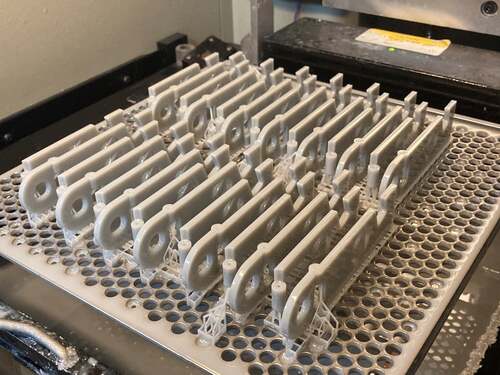
Why Choose SLA 3D Printing?
SLA is particularly valuable when detail, accuracy and surface finish are important.
Compared with some other 3D printing technologies, SLA can produce parts with very fine features and relatively smooth surfaces straight from the printing process. Parts can also be post-processed, sanded, painted or otherwise finished to achieve the required appearance.
However, there isn't one 3D printing process that is right for every application.
The best technology will depend on factors such as:
- Required part quantity
- Material properties
- Level of detail
- Surface finish
- Part size
- Intended application
- Budget
- Lead time
At AME-3D, we work across SLA, SLS, MJF, FDM, vacuum casting and RIM, allowing us to recommend the most suitable manufacturing route rather than simply offering one process.
Need an SLA 3D Printed Part?
Whether you're developing a new product, creating a detailed prototype or need a small number of specialist components, SLA can provide a fast route from digital design to physical part.
We can support projects from 3D CAD design and prototyping through to finishing and low-volume production, all from our facility in South Yorkshire.
If you already have a CAD file, send it to our team and we can help determine whether SLA is the right process for your application.
Looking for high-detail SLA 3D printing in the UK? Get in touch with AME-3D to discuss your project.
